musicLabe
A creative tool for learning music through play and intuition.
musicLabe helps students explore scales, moods, and harmony through the logic of the circle of fifths. Perfect for teachers who want to make theory accessible, engaging, and fun.
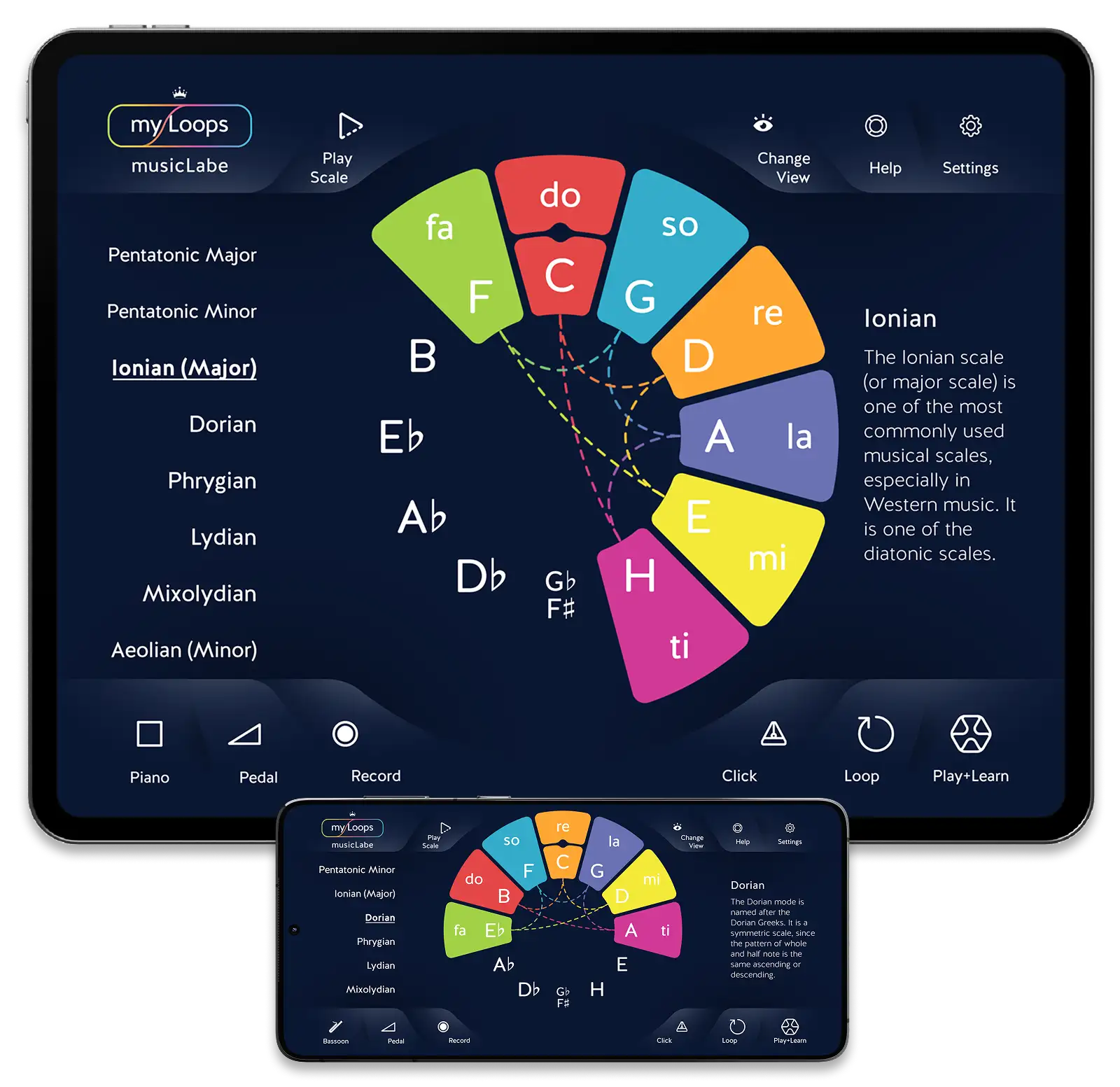
Explore scales and modes, visually and intuitively
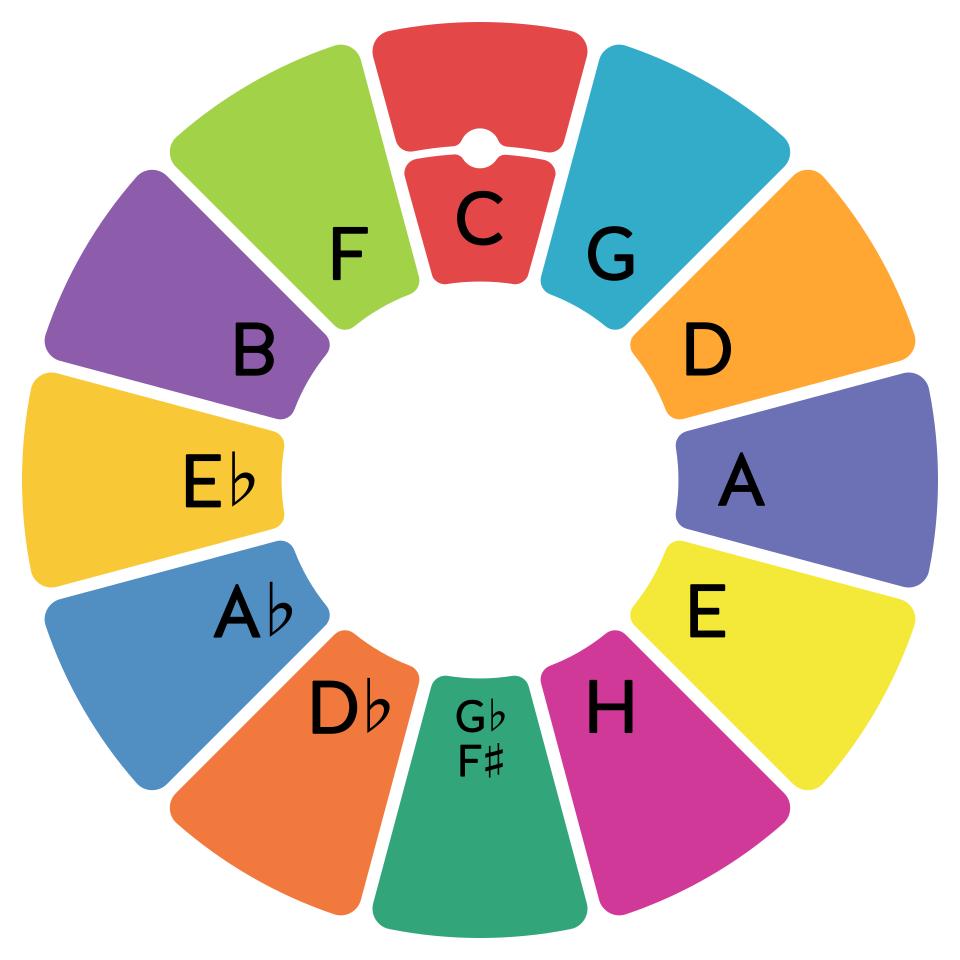
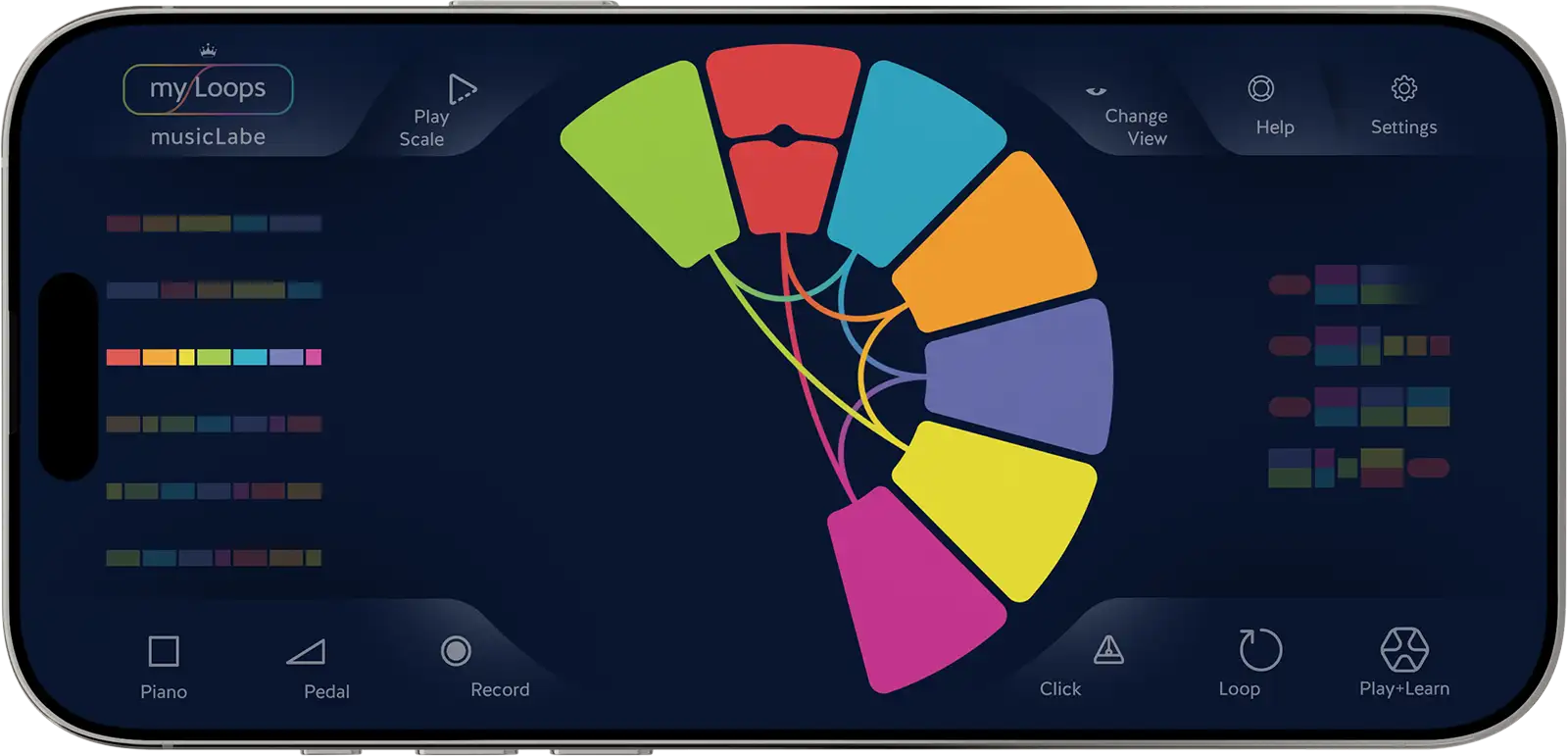
musicLabe’s circular layout is based on the circle of fifths, turning abstract theory into a visual and tactile experience. It’s a modern way to teach how music sounds and feels, students can explore modes and scale relationships by ear and by intuition.
Bring singing and solmization to life
Reimagining the Kodály approach for the 21st century
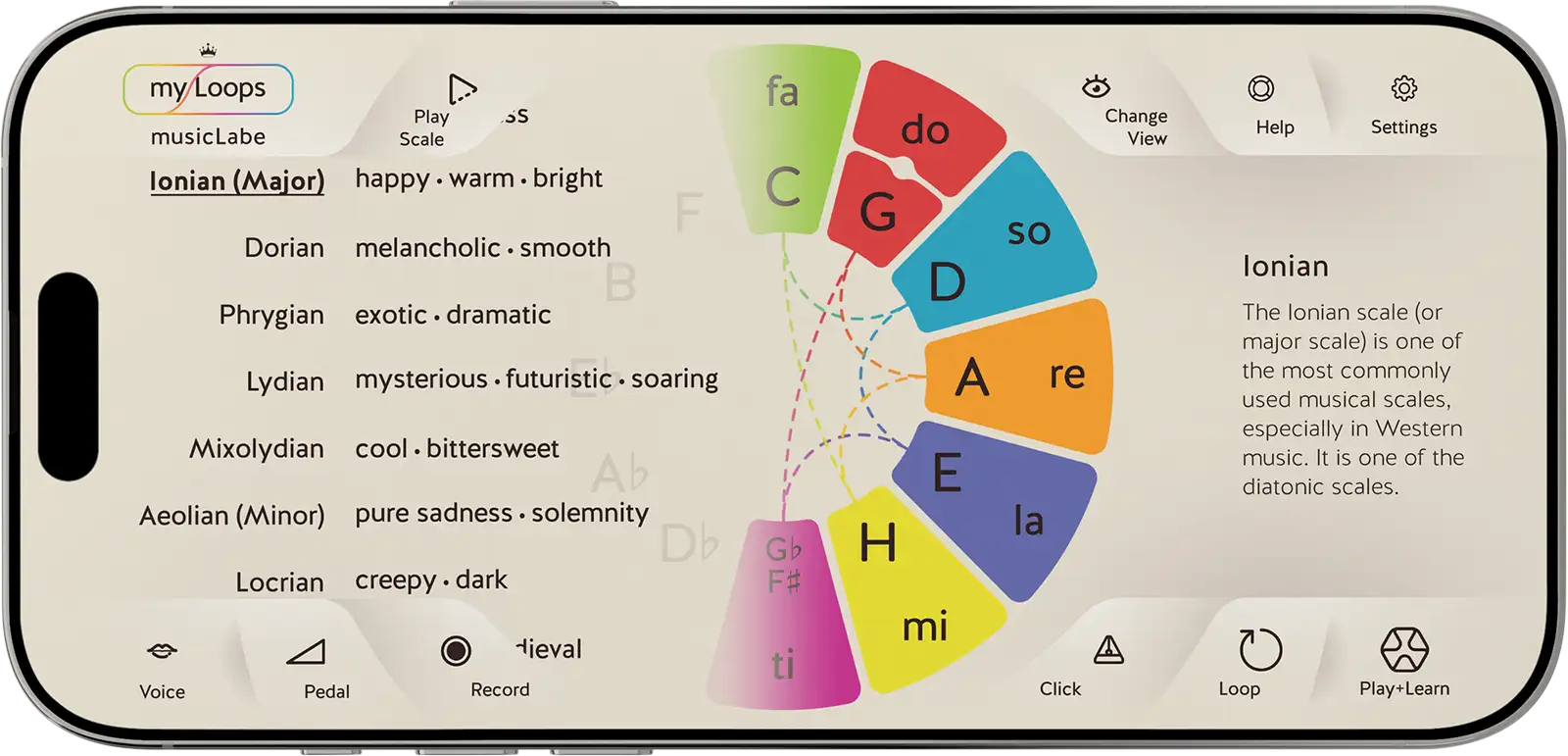
With musicLabe, students can easily select a scale from the list and explore its mood. The notes of that scale appear on the circle, where they can listen, play, and sing along immediately, discovering how each note feels within the key.
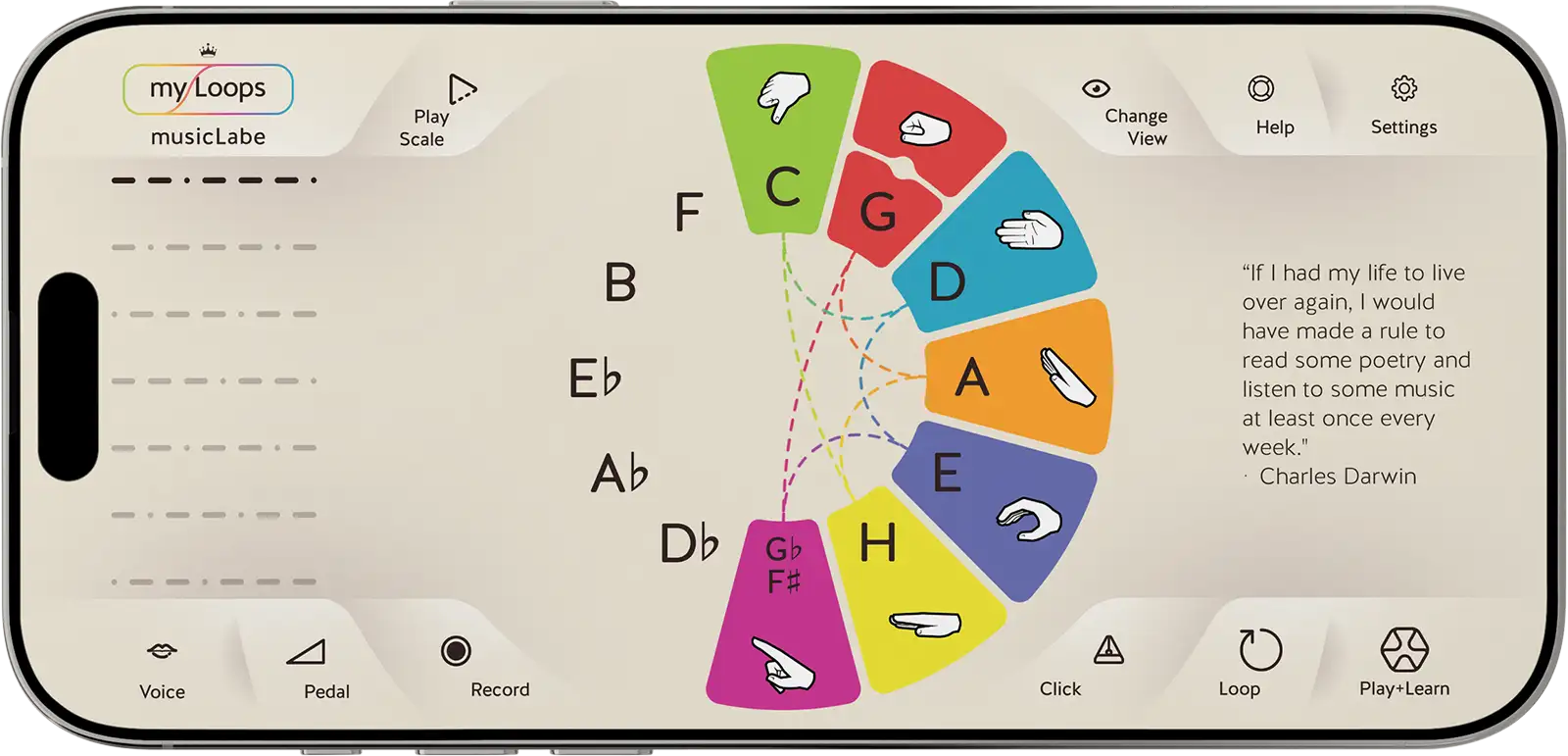
For classrooms that use the Kodály method, musicLabe includes a dedicated hand-sign view, showing each note with its corresponding Kodály hand gesture. This bridges traditional ear-based teaching with an interactive, visual, and playful experience.
To find a comfortable singing range, simply rotate the circle to transpose the scale into any key. This makes it easy for everyone to sing in a range that suits their voice, and makes relative solmization easier to understand and practice.
Music games for fun and learning
musicLabe also includes interactive music games designed to strengthen listening skills and musical memory.
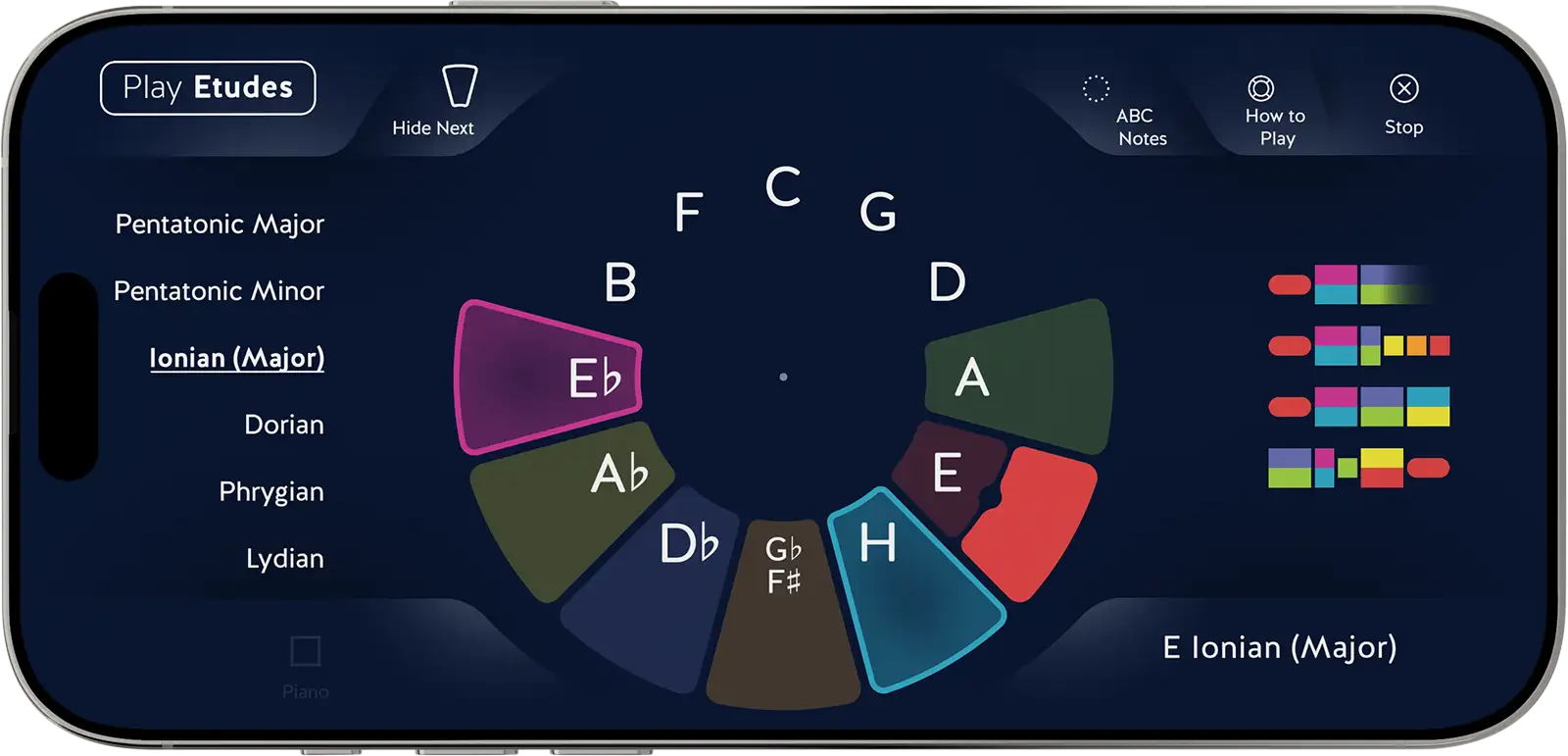
For example, the Melody Memory game challenges students to follow a random melody generated from a chosen scale, note by note, similar to the well-known ‘Simon’ game.
It’s perfect for warm-ups, classroom challenges, or solo practice, making music learning active, engaging, and fun.
Discover harmony through patterns
In musicLabe, chords aren’t played by pressing a single button, they’re built through patterns on the circle.
Each chord shape is formed by touching all notes that belong to it, helping students see and feel the harmonic structure instead of relying on labels like “C major” or “A minor.”
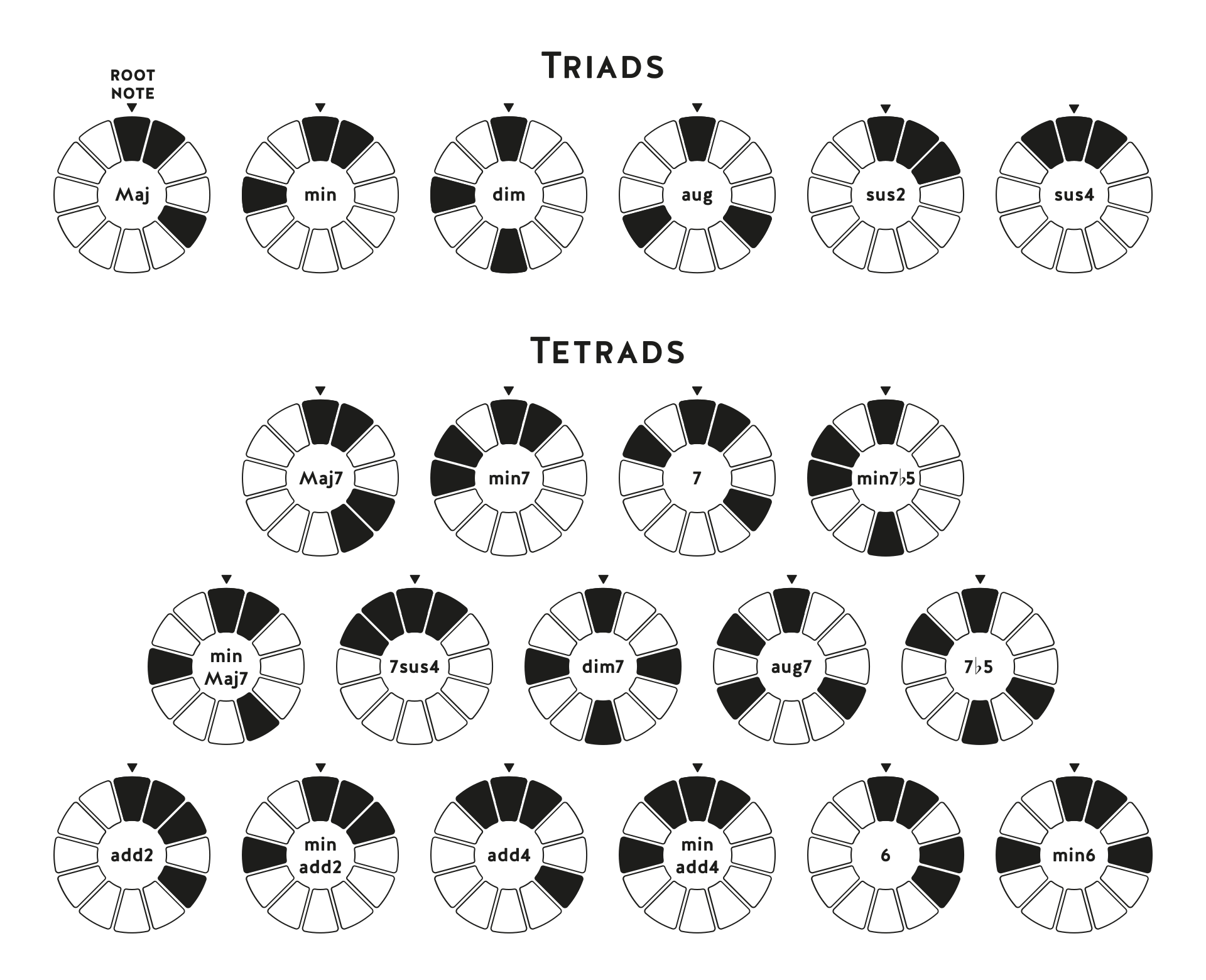
When using the chromatic scale, the full circle becomes a harmonic playground, allowing you to follow chord patterns and accompany any song.
It’s both a creative harmony tool and a fun coordination game, perfect for classroom interaction or group exercises.
Watch how two players can perform together, one playing the melody, the other following chord patterns.
Explore how students can build music together, loop by loop.
musicLabe isn’t just for individual exploration, it’s a tool for collective creativity. Students can record musical loops and share them with classmates, who can then add new layers, modify existing parts, or continue the composition from where it was left off.
This process turns music-making into a collaborative experience: each student contributes a part, and together they build a unique, shared piece, one layer at a time.
Perfect for group projects, remote classes, or creative challenges where everyone plays a part in the final sound.
Accessible for diverse learners
musicLabe supports neurodiverse and non-traditional learners who struggle with notation-based teaching.
It builds understanding through pattern recognition and active engagement.
“Kids and adults alike love to make their own music. This app makes you learn musical concepts before the terminology, it’s attention-catching, fun, and you don’t realize you’re learning until it’s too late!
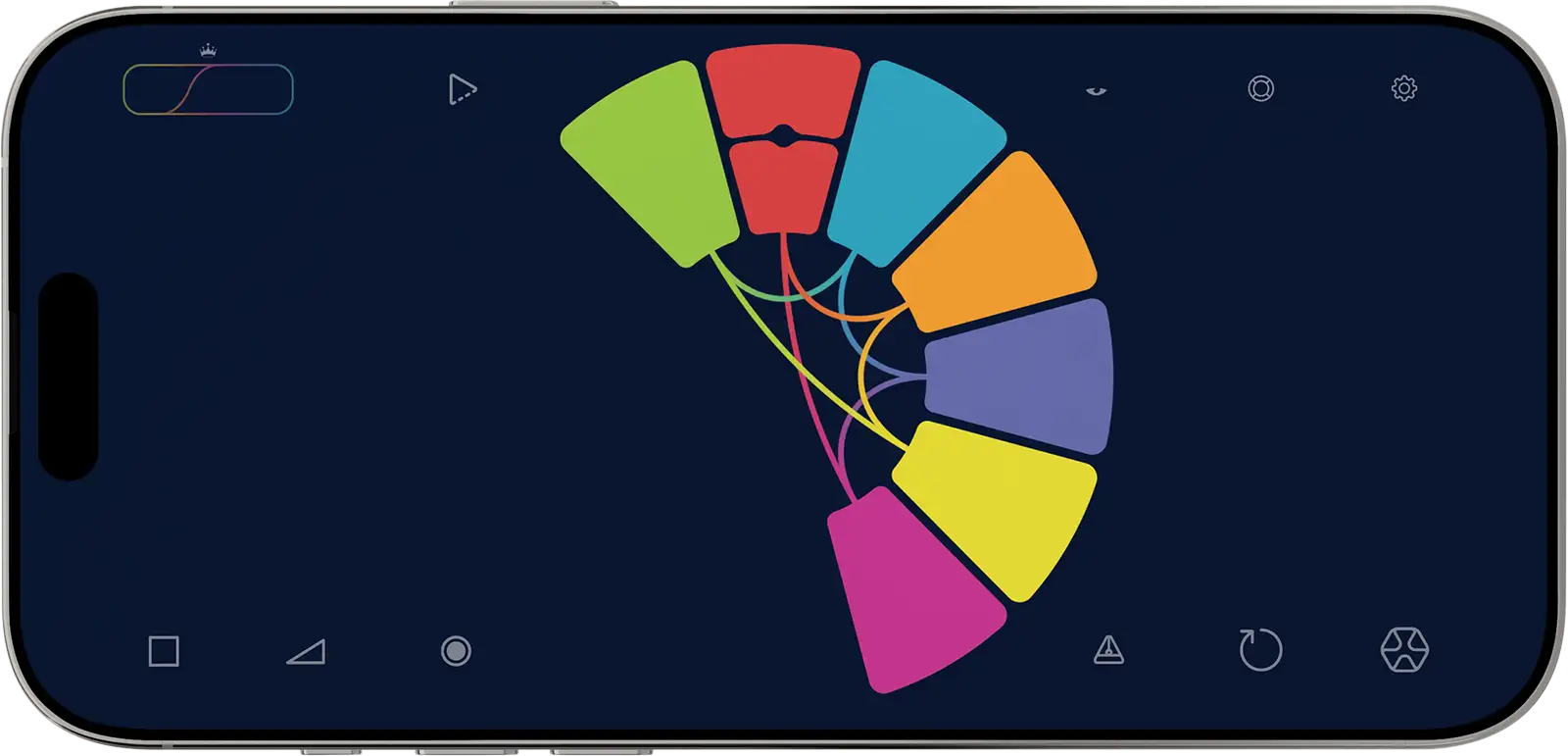
My favorite part is that it’s not piano-centric. The notes aren’t laid out like any instrument, which helps students understand harmony and melody more deeply.”
— Rachael Lauren, Music Teacher, Musician, Entrepreneur
“The musicLabe application has the unique ability to guide both kids and adults through their music learning journey with ease and a deep emotional connection, so that their talent can develop within the spirit of the Kodály method. I am able to state with complete certainty that this tool could be used all over the world as an incredibly useful addition to the traditional relative solfège method.”
— Dr. Árpád Tóth, music and vocal teacher, conductor, teacher of music theory and solfeggio at the Academy of Music, The Kodály Institute
For schools and music educators
Make music theory hands-on and engaging for your students with musicLabe.

Our education licenses are designed for classrooms, music schools, and group learning, with volume discounts and teacher support included.